Short-Form Video Retention Engine - Turn Viral Shorts into Teaching Templates
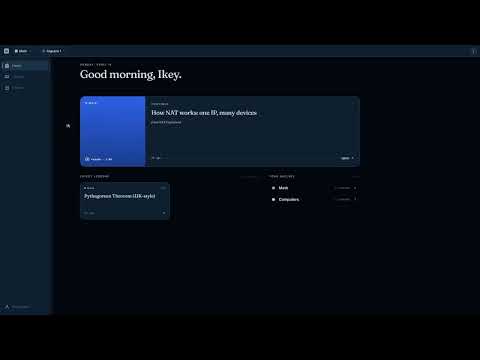
Drop in any TikTok, Reel, or YouTube Short whose pacing hooks you. Pick a topic you want to teach. Reelize reverse-engineers the reference's retention structure - hook timing, beat grid, scene rhythm, voice cadence - and delivers a finished short on that blueprint. Not a script. A video.
Project Overview
The Problem
Short-form video is the most effective retention format ever invented. Creators on TikTok and YouTube Shorts have engineered pacing, hooks, and beat structures that hold viewers for 60 straight seconds.
Meanwhile, educators - and anyone trying to explain a complex idea online - are still losing people in the first three seconds. The retention blueprints exist. They just aren't reusable.
Our Solution
Reelize lets you drop in any TikTok, Reel, or YouTube Short whose pacing hooks you, pick a topic you want to teach, and reverse-engineers the reference's retention structure - hook timing, beat grid, scene rhythm, voice cadence.
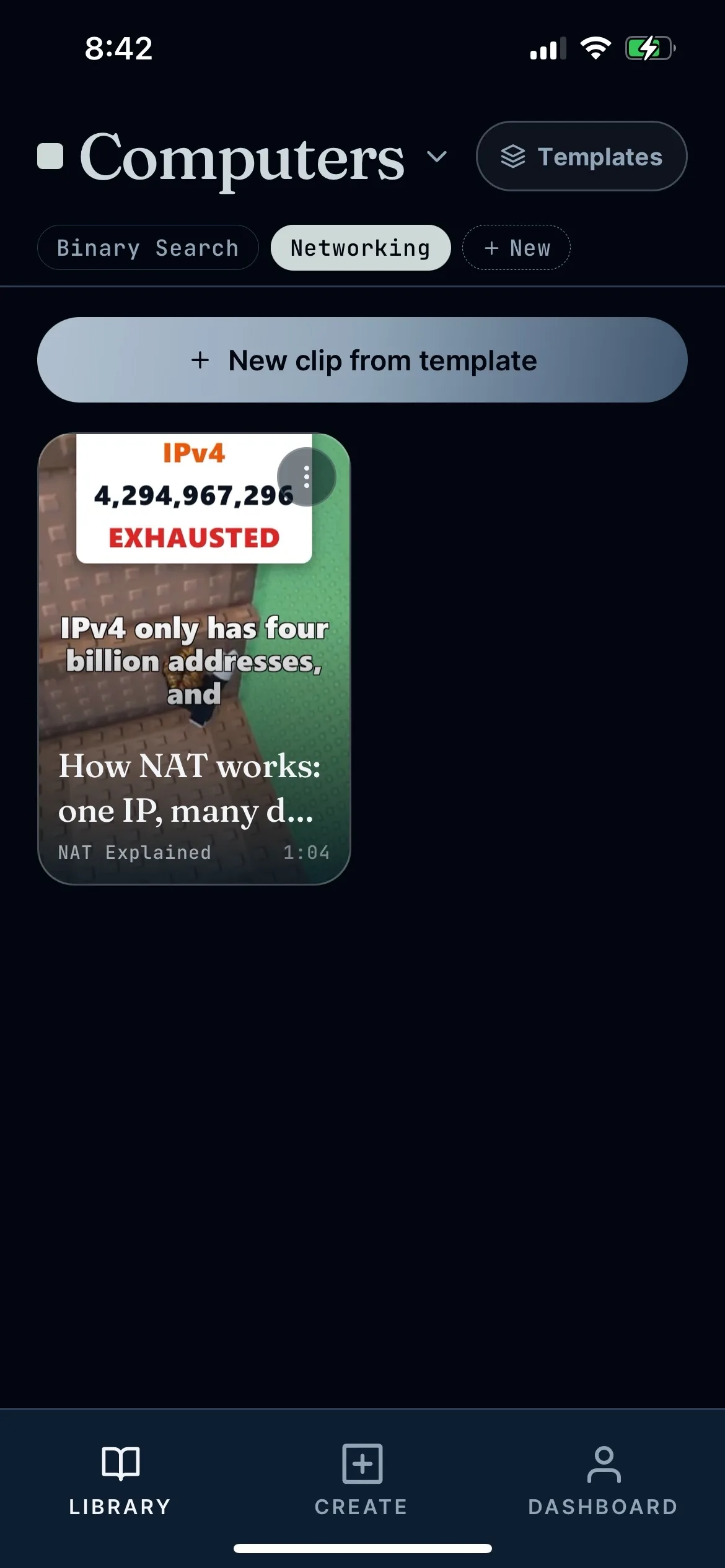
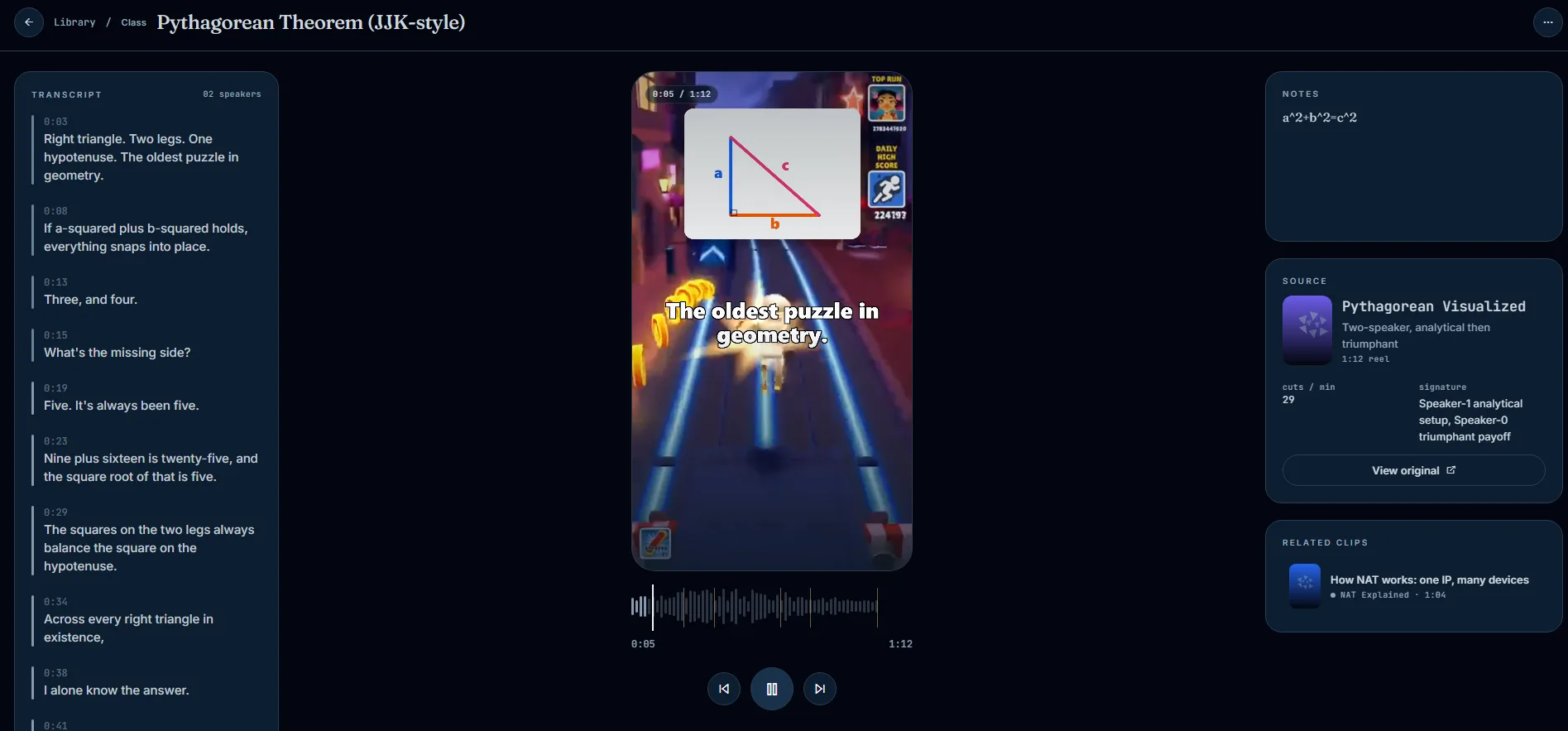
The output is a fully rendered short on that blueprint, delivered to your phone, ready to publish. Not a script. Not a slideshow. A finished video.
The Pipeline
ANALYZE
Demucs for audio stem separation, Whisper for transcription, Shazam for music ID, librosa for beat grid and energy envelope, pyannote for speaker diarization, and Gemini for scene detection with a keyframe refinement pass.
EXTRACT
Hook timing, pacing curve, visual rhythm, and voice cadence assembled into a single shared manifest that every downstream stage reads from.
GENERATE
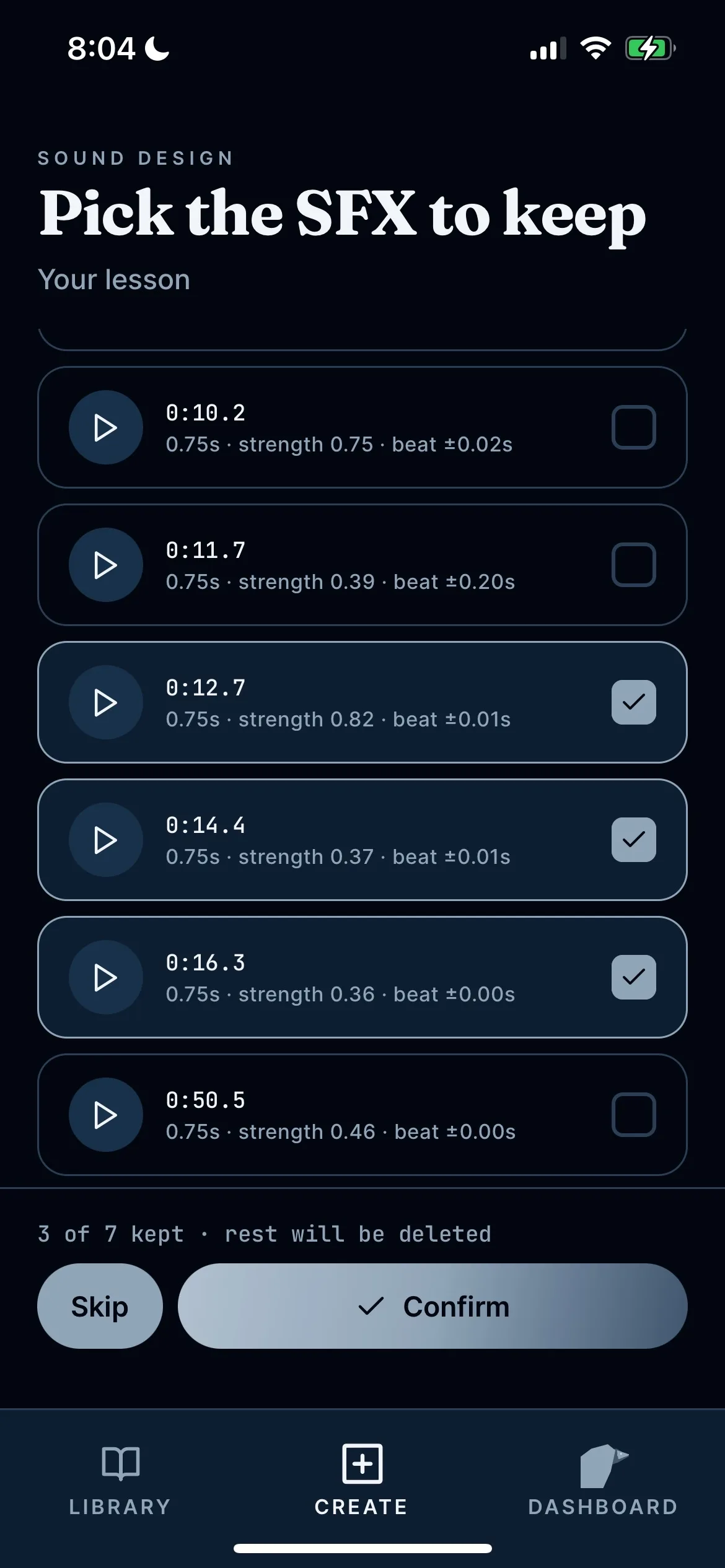
Gemini writes a script aligned to the reference's beat grid (beat grid and energy envelope fed directly into the prompt). ElevenLabs synthesizes the voiceover. Music and SFX matched to the original's energy curve.
RENDER
Remotion (React-based video framework) composes the final video with layered voice, music, SFX, and footage timed to the original's beat grid at millisecond precision.
Tech Stack
Mobile + web + backend shipped in 48 hours
Client
Expo / React NativeCross-platform app handling upload, preview, and download. Signed-URL flows to Cloudflare R2 to dodge platform-specific multipart upload quirks across iOS, Android, and web.
Backend
FastAPI OrchestrationFastAPI orchestrates a serialized job queue so GPU-heavy analysis and render stages don't contend for memory. One job flows end-to-end before the next begins.
AI Models
Seven Specialized ServicesEach model specializes in one signal: stems, transcript, music ID, beat grid, diarization, scene detection, and voice synthesis. A shared manifest unifies their output.
Renderer
Remotion (React-based)Remotion composes the final video deterministically - voice, music, SFX, and footage aligned to the reference's beat grid with millisecond precision.
Infrastructure
Supabase + Cloudflare R2Supabase Postgres tracks job state across the pipeline. Supabase Storage plus Cloudflare R2 hold media assets - source videos, stems, renders - behind signed URLs.
Hard Problems
What actually took the 48 hours
Systems & Orchestration
Seven specialized services producing data in different shapes and timing spaces. Half the 48 hours went into designing a single shared manifest with retries and partial-failure recovery. The AI models were commodities; the pipeline was the product.
Running Demucs, Whisper, pyannote, and Gemini concurrently on one machine melted memory. Solved with a serialized job queue that processes one job end-to-end.
Getting a generated script to land emphasis on the reference's existing beat drops required feeding the beat grid and energy envelope directly into the LLM prompt, not just the transcript.
Signal & Rendering
Single-pass Gemini detection missed half-second cuts on fast-edited Shorts. Added a keyframe refinement pass that re-checks boundaries with pixel-level diffs.
Aligning voice, music, and footage to the millisecond inside Remotion required normalizing every timing source to a single clock before composition.
Expo file handling differs across iOS, Android, and web. Replaced direct multipart API uploads with signed-URL flows to R2.
Built With
By the Numbers
Grand Prize at Hack Brooklyn 2026
From Idea to Shipped
AI Services Orchestrated
Builders
Coverage & Writeup
Written by Eliyahu Mizrahi
Seven AI Services in 48 Hours: Building Reelize at Hack Brooklyn 2026
The full project writeup, the short-form video retention engine that reverse-engineers viral Shorts, and why the AI models weren't the hard part.
Read on MediumMonmouth University CSSE
Monmouth University Recognizes Reelize Win at Hack Brooklyn 2026
Monmouth University CSSE celebrated the team's 3rd Grand Prize finish at Brooklyn College's first-ever hackathon.
View Post